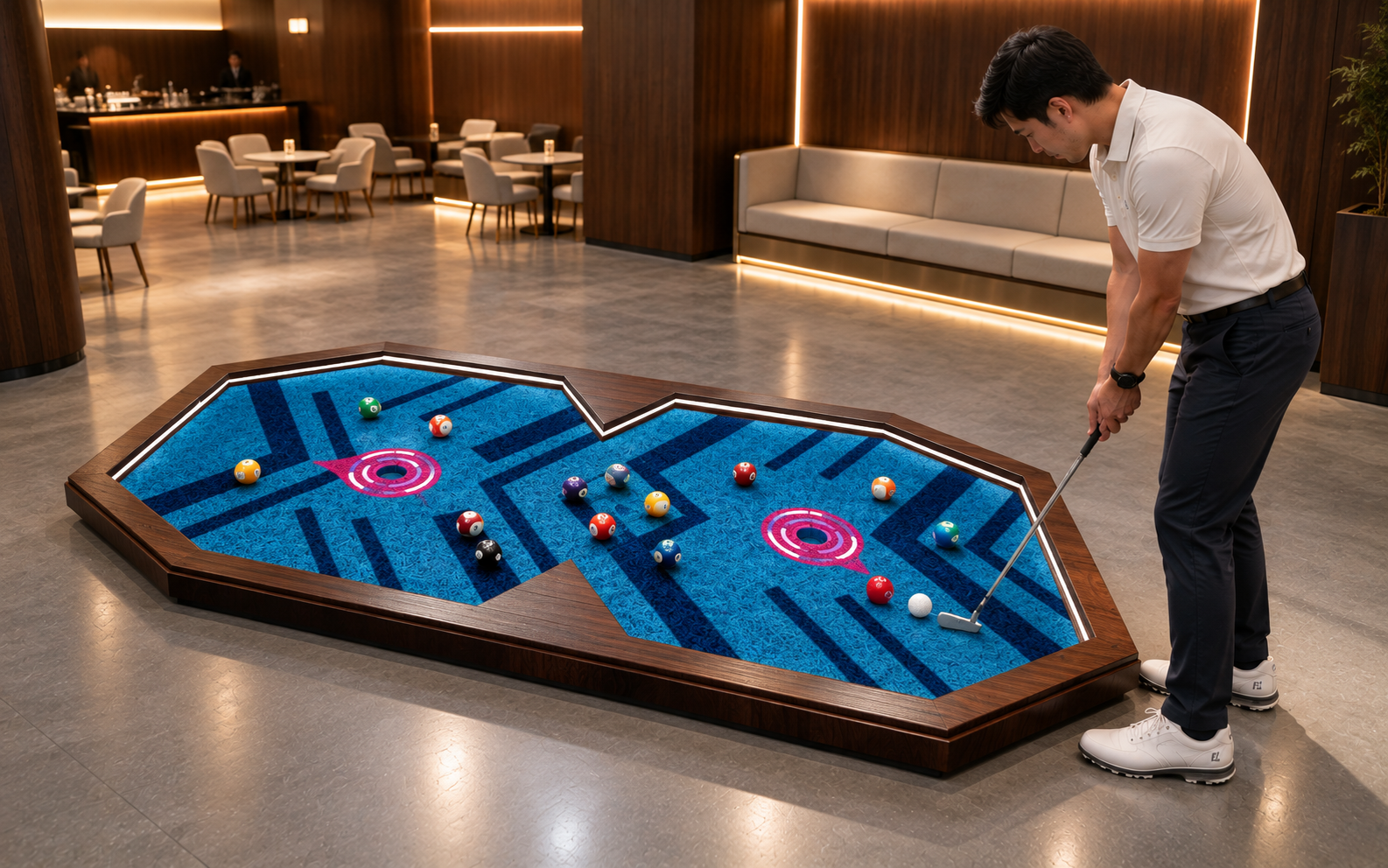
What to Assess Before Adding Mini Golf to an Existing Entertainment Venue
For a venue owner evaluating a mini golf quotation, the existing use of the floor is part of the investment decision. Work through a busy session on the proposed layout with your operations team, then price the changes to staffing, space use and the guest offer.
1. Identify the guests and the visit you want to change
Give the addition a defined place in the visit. A separately booked group round needs a booking slot and an arrival arrangement. A game offered to waiting companions needs an explanation at the moment they are deciding how to spend that time. A party-package addition has to fit the host’s timetable. Choose the offer you want to assess before selecting the number of holes.
Your existing records provide a starting point: bookings, admissions, guest enquiries and sales by session. Read them alongside observations at the proposed location. A weekday gap and weekend party overflow represent different uses of the same space. Keep them separate when discussing where the new activity belongs.
The IAAPA research overview lists attraction mix, admissions, staffing, visitor information, revenue and expenses among its operational benchmark topics. Use those categories to organise the venue’s evidence; the public overview supplies no mini golf uptake rate for this project.
A trial becomes informative when the offer is clear. Record who was offered the activity, the price, the time slot and who accepted. Keep complimentary participation and discounts visible. This gives you something to compare with later paid sales, whereas a favourable response to a product image leaves the buying decision open.
2. Check the usable layout, not just the empty floor area
Take a measured plan to the equipment discussion. It should show the area around the proposal as well as the area inside it: columns, doors, services, reception, seating and adjacent attractions. Mark what the space does today, including waiting, circulation, storage and staff access.
A drawing of the holes becomes useful when playing positions, the next group’s waiting position and service access appear beside them. Walk from ticket purchase to equipment collection, the first hole, the exit and the return point. Add another group waiting to start and a member of staff assisting a player. The drawing can then be discussed as an operating arrangement.
Have the responsible project team review access, circulation and the building requirements for this particular site. Keep the review with the selected equipment dimensions and drawing revision. The pre-installation layout guide develops the route and service-access questions; the checklist below helps capture the answers at your venue.
| Check on the drawing | Observe in the venue | Resolve before ordering |
|---|---|---|
| Equipment and playing positions | Where players stand and move | Complete selected layout and access review |
| Waiting and group release | Queue during a busy session | Where the next group waits |
| Shared reception and equipment return | Competing tasks and returning guests | Named responsibilities and storage |
| Service and delivery route | Doors, turns and access to equipment | Site-checked delivery and maintenance plan |
| Displaced use | Current seating, games, events or overflow | What is moved, lost or retained |
A site assessment checklist. It does not specify universal clearances, an approved occupancy or a fixed space per hole.
3. Rehearse the work during an existing busy session
Rehearse the busy session with the people who will run it. Follow payment, game explanation, equipment issue, group direction, scoring questions, return and cleaning. Put each task against the employee’s existing duties at that time. The shared reception desk is one arrangement to try during this rehearsal.
Consider a party host needed at the dining area just as another group asks for help at the first hole. A rehearsal can expose that conflict while there is still time to change arrivals, assign assistance or improve the instructions. Note starts, finishes, waiting and interruptions. Include questions about unfamiliar targets and disputed results rather than timing only a successful demonstration.
The scoring format belongs in this discussion. Stroke counting and point-scoring challenges require different guest explanations. With the quoted configuration, walk through player identification, entry, correction and the next-hole transition. The manual-versus-automatic scoring guide separates those functions. Use the rehearsal observations when choosing booking intervals and staff responsibilities.
4. Calculate what changes for the whole venue
Build the comparison around the change in the existing business. With separately sold rounds, record paid entries and distinguish them from newly acquired visitors. For a bundle, use the actual package uplift and account for changes to existing purchases. Include an additional food or drink contribution where the evidence supports an additional purchase.
Keep the initial equipment, delivery, site preparation and opening expenditure in a separate investment schedule. The U.S. Small Business Administration’s planning guidance distinguishes one-time and monthly expenses. This example uses that budgeting distinction; local accounting and tax treatment remain matters for the business and its advisers.
For the worked example, assume 400 paid entries in a month at EUR 8 each, net of sales tax. Assume added labour of EUR 900, other added fixed operating costs of EUR 200 and variable costs of EUR 0.50 per entry. The activity previously occupying the area contributed EUR 600 per month after its avoidable operating costs. These are invented inputs to demonstrate the calculation; replace them with the venue’s records and the actual proposal.
| Hypothetical monthly item | Calculation or assumption | EUR |
|---|---|---|
| Added mini golf sales, net of sales tax | 400 paid entries × EUR 8 | 3,200 |
| Added labour | Assumed monthly amount | −900 |
| Other added fixed operating costs | Assumed monthly amount | −200 |
| Variable operating costs | 400 entries × EUR 0.50 | −200 |
| Contribution displaced from the area | Prior contribution after avoidable costs | −600 |
| Change in venue operating contribution | 3,200 − 900 − 200 − 200 − 600 | 1,300 |
Invented example in EUR per month. Existing unchanged overhead is excluded. This is neither net profit nor an investment-return calculation; replace every assumption with the actual proposal and venue records.
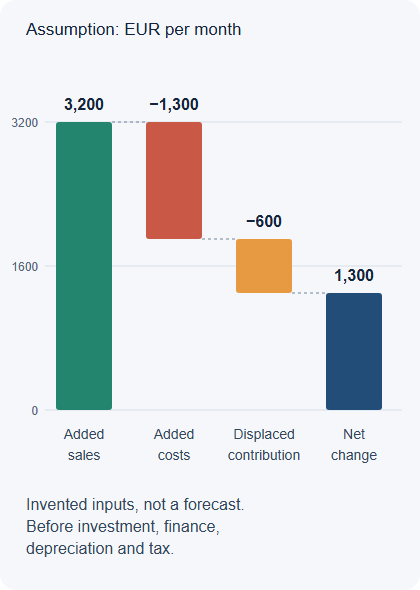
Added sales are 400 × EUR 8 = EUR 3,200. Added operating costs are EUR 900 + EUR 200 + (400 × EUR 0.50) = EUR 1,300. After the EUR 600 contribution given up in the same area, the monthly change is EUR 3,200 − EUR 1,300 − EUR 600 = EUR 1,300. Use the contribution lost from the previous activity here; subtracting its sales as well would count that displacement twice.
The EUR 1,300 is an operating-contribution change before unchanged shared overhead, depreciation, finance and tax. The initial investment sits outside this monthly example. Test a lower-sales case with the costs that would remain and record installation closure separately. The mini golf ROI guide continues into investment and cash flow.
5. Agree a feasible installation and a measured opening
Work backwards from the proposed opening date with the site team. Establish the delivery route, unloading, storage, preparation, services, assembly, testing and handover. The written scope should identify who does the work and which existing bookings or operating areas it affects. Include the closure and reopening arrangements in the purchase discussion.
For a smaller first phase, obtain a drawing and quotation for that phase. Agree how later equipment, connections, storage and removal would work for the supplied version. The modular-versus-custom comparison helps define this scope before expansion becomes an assumption in the budget.
At opening, measure the reason you bought the addition: paid uptake among the guests offered it, the change in venue contribution, waiting, staff time and service issues. Keep the offer, discounts and measurement period beside the results. Review what the new game adds alongside the use it replaced. If the operating rehearsal or lower-sales case leaves the proposal unresolved, settle those questions before committing to the equipment.
Assess the addition against your existing operation
Send a measured plan, the proposed guest offer and the use of the area today. Request a layout and supply scope that your venue team can review alongside staffing and installation arrangements.
THE COLLECTION
Products discussed in this guide
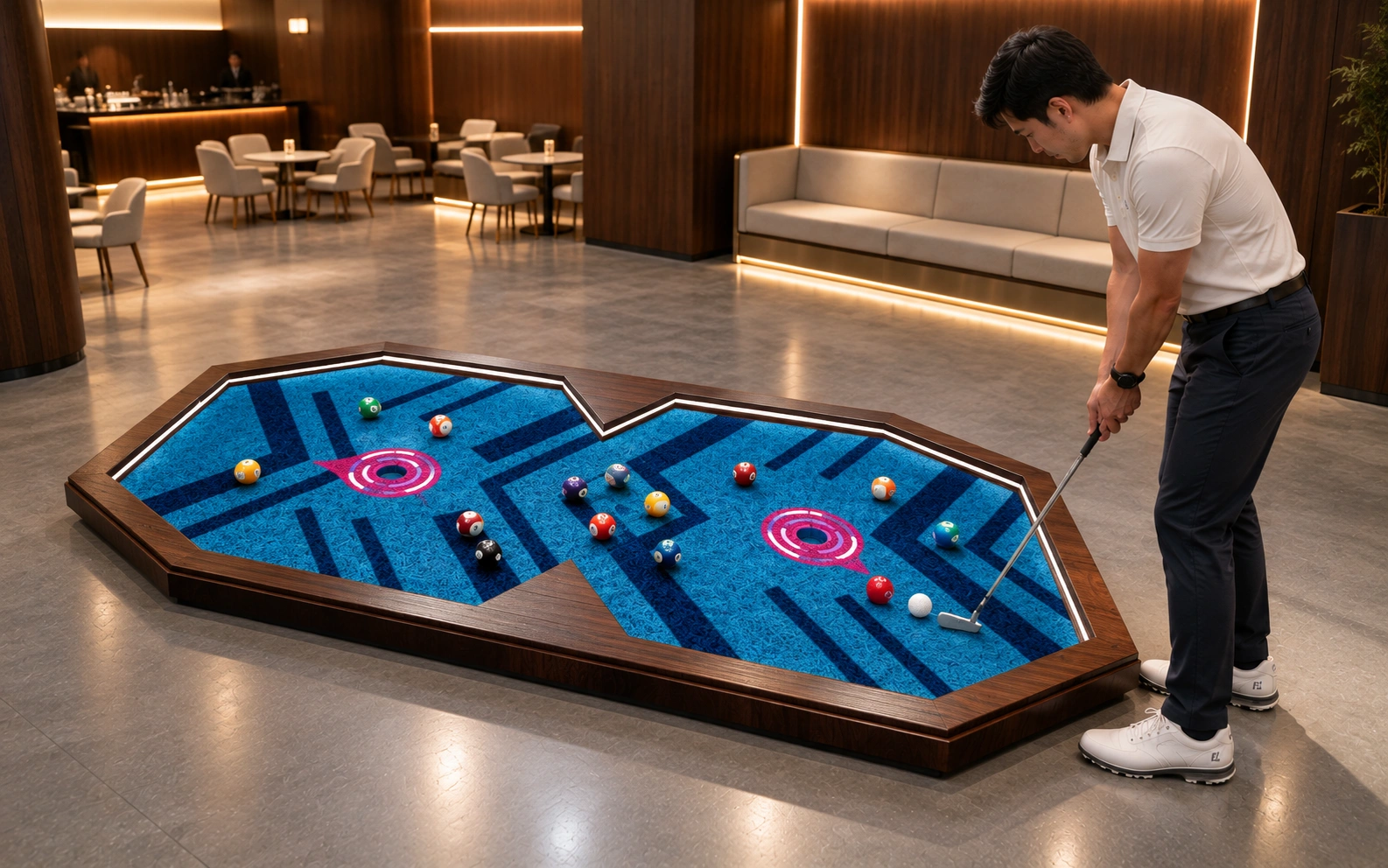
Billiard Golf Hole
Read the positions of the ball obstacles and select a line around them. Use direction and power control to reach the target hole.
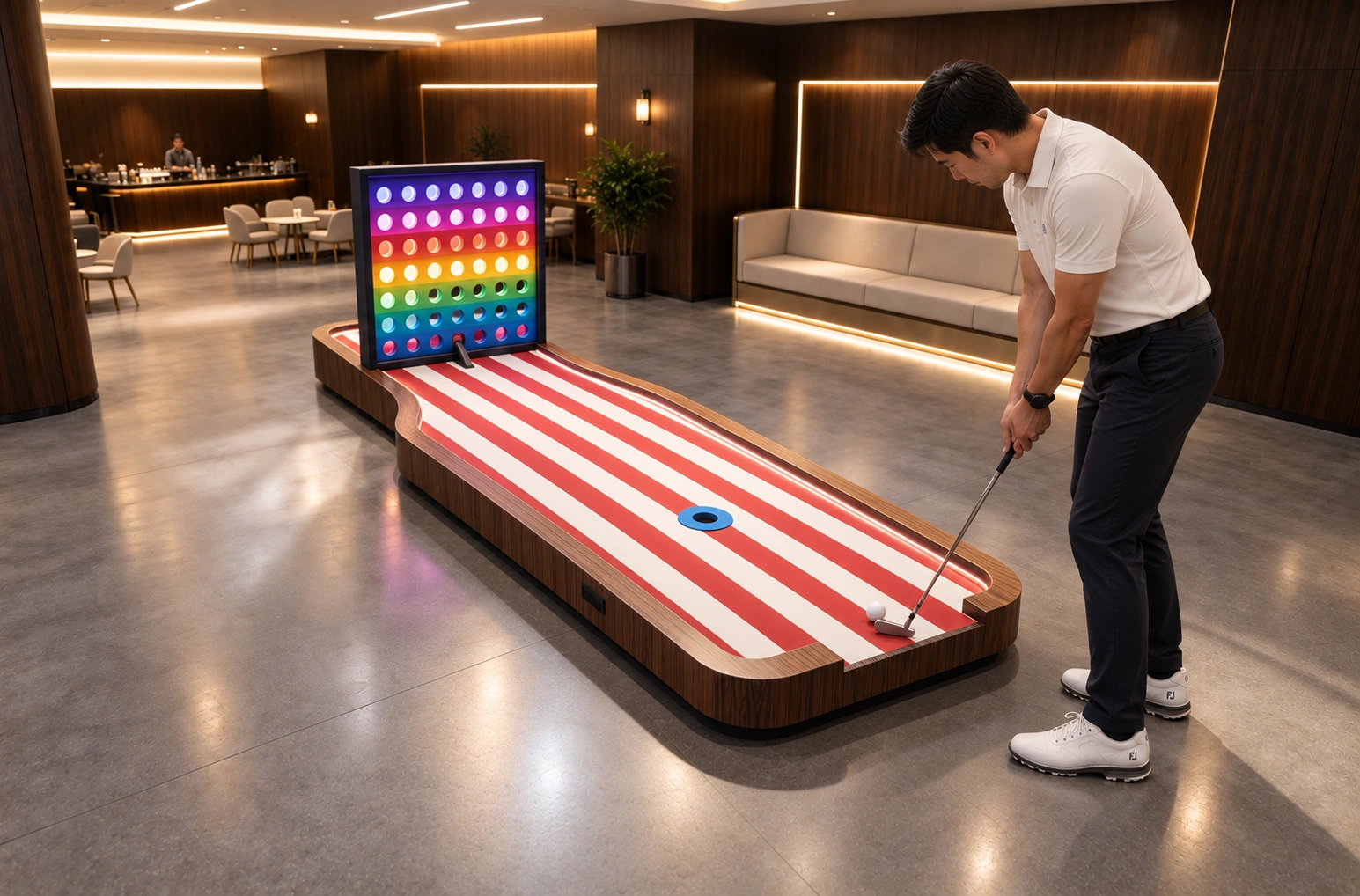
Rainbow Golf Challenge
Choose a coloured target using its position and point value. Putt toward it, balancing accuracy against the potential score.
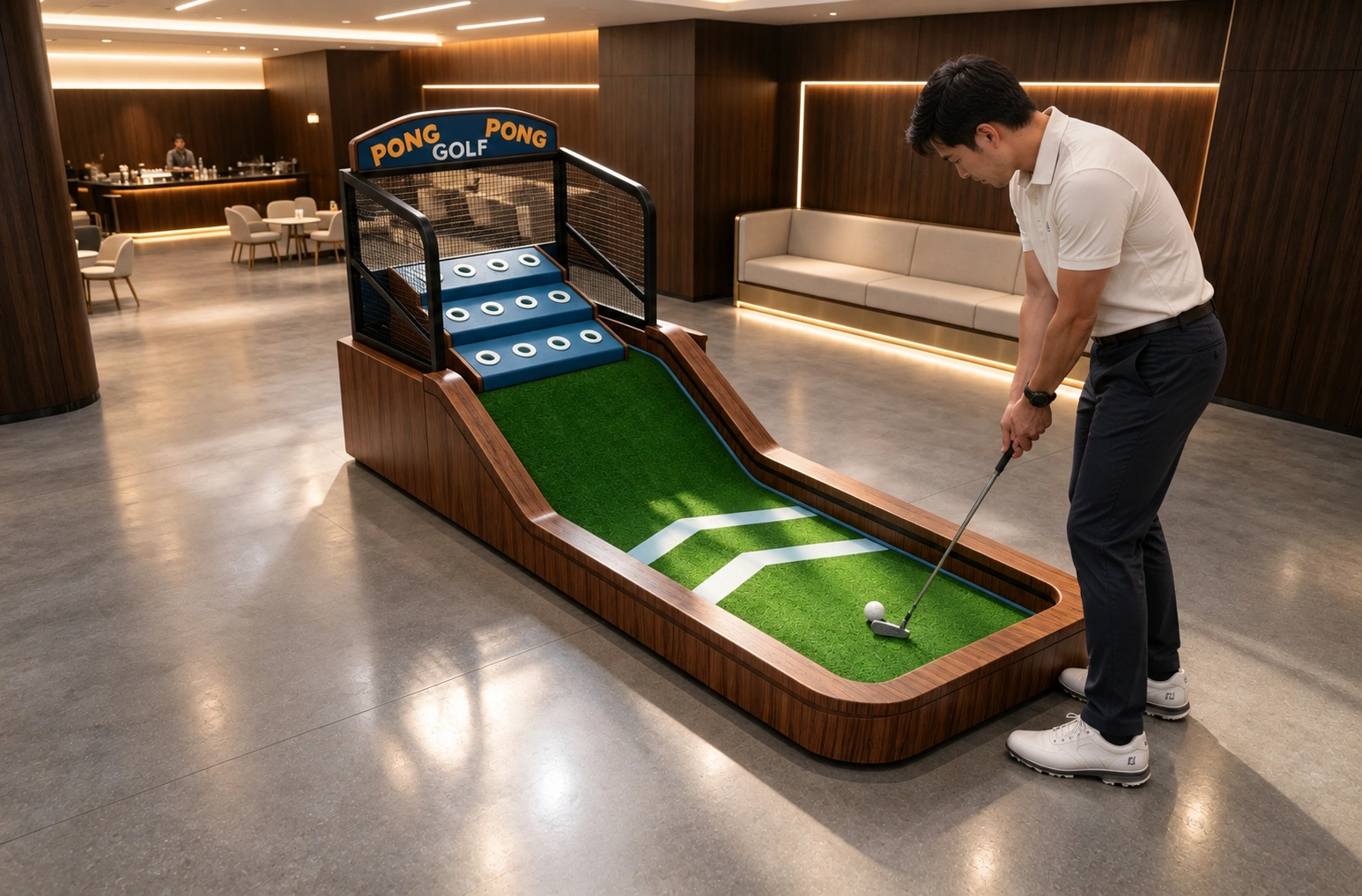
Beer Pong Golf Hole
Aim toward a cup target and putt the ball into it. Control direction and strength; successful shots score according to the target.